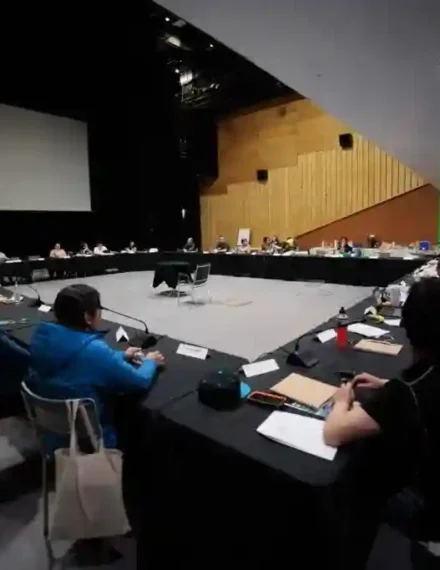
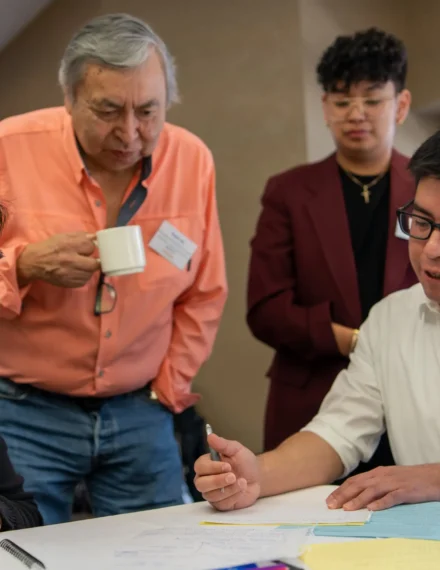
On a cold, snowy February weekend in Ottawa, 20 emerging Indigenous leaders came together to learn about Modern Treaties at the 8th National Treaty Simulation.
They had travelled from all across Canada: Yukon, British Columbia, Northwest Territories, Nunavut, and Quebec.
“The Treaty Simulation is a hands-on learning experience where Indigenous youth from all around Canada can work on their public speaking and work as a team,” said Zariah Clayton, a member of the Nisga’a Nation, previous Treaty Simulation participant, and chaperone at this year’s National event.
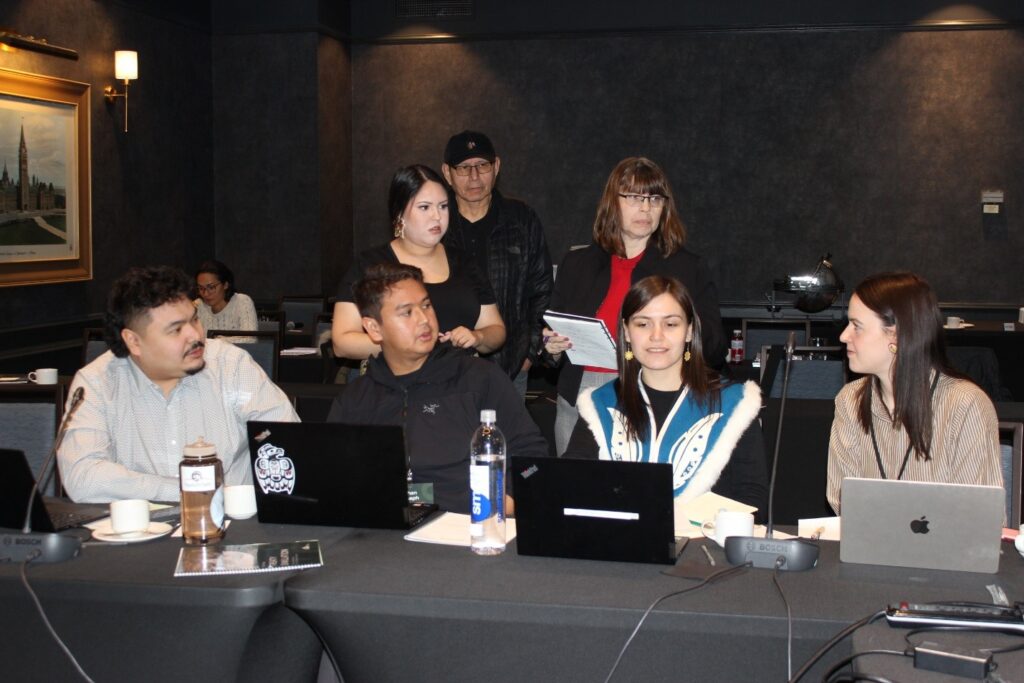
Participants discussing negotiation strategy with advisors Dr. John B. Zoe and Robin Bradasch.
With a format like the Model UN simulation, the Treaty Simulation saw young leaders build the practical skills, confidence, and relationships they need to get involved in treaty work. The annual event is hosted by The Gordon Foundation and the Land Claims Agreements Coalition, with support from NVision.
“The Treaty Simulation to me is this huge growth spurt, and I think this huge growth spurt is just going to keep planting more seeds, and it’s going to keep igniting my fire, helping me reimagine things differently,” said Adam Gauthier, a member of Iɬaʔamɩn Nation (Tla’amin Nation) and Soto First Nation.
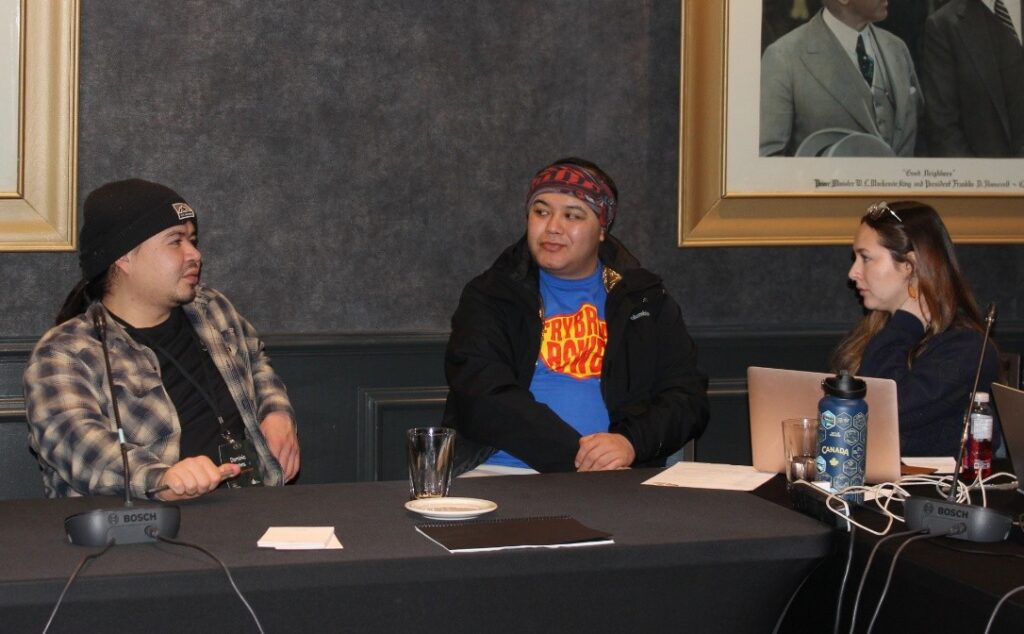
Adam Gauthier (center) liaising with opposing teams at the negotiation table.
Participants were divided into three groups representing a fictional Yukon First Nation, the Yukon Government, and the Government of Canada. Together, they negotiated how to move forward with a Woodland Caribou Recovery Plan. The simulation mirrored the kinds of conversations that take place during the implementation of Modern Treaties, also known as Land Claims Agreements.
“This experience has been really cool… I’ve gotten to meet a lot of great people and a lot of people with similar interests to me. And the advisors are also great. You get to learn a lot of knowledge from them,” said Lucia Meurer-Mills, a member of Vuntut Gwitchin First Nation.
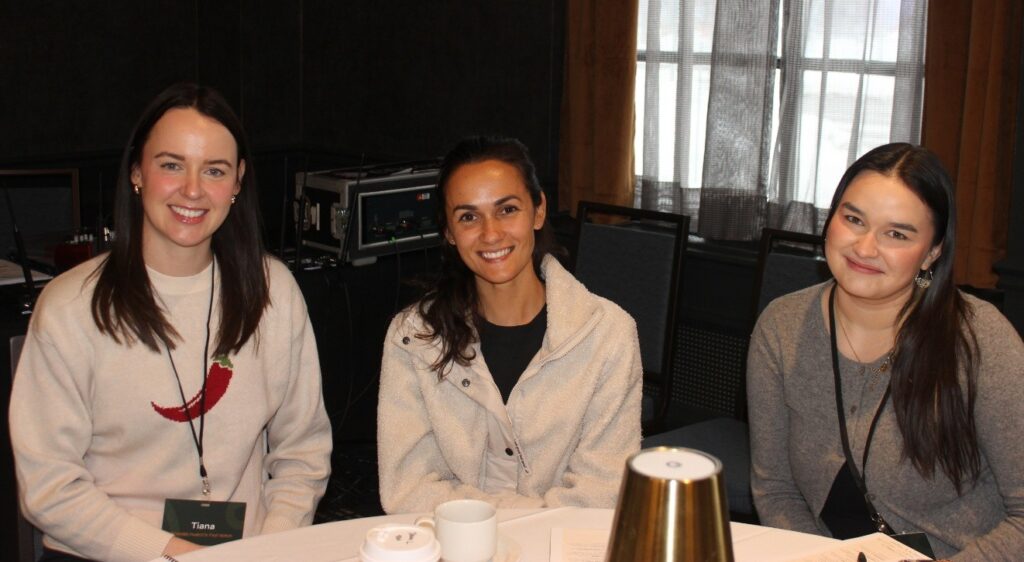
Lucia Meurer-Mills (far right) and fellow participants at the National Treaty Simulation.
Participants worked with a panel of expert advisors, who together have more than 100 years of experience in treaty negotiations. This knowledge sharing across generations provided invaluable context, helping ground the next generation of Indigenous leaders in their history.
“I love it. Because they are Elders, I noticed how important it is to always listen and hear what they have to say. They are the ones that lived it. I’m also the younger generation that can help move us in a step forward, so having that great wisdom is very important,” said Christa Mckay-Kosolofski, a member of Nisga’a Nation.
“It’s a lot of fun,” said Daniel Quan-Watson, a former Deputy Minister for the Government of Canada and Treaty Simulation advisor. “I am so energized by the commitment of these young people… And to be able to share some of my experience that I’ve gained over the years and watch them take bits and pieces from myself, from the other advisors, from the staff is a really enjoyable experience.”
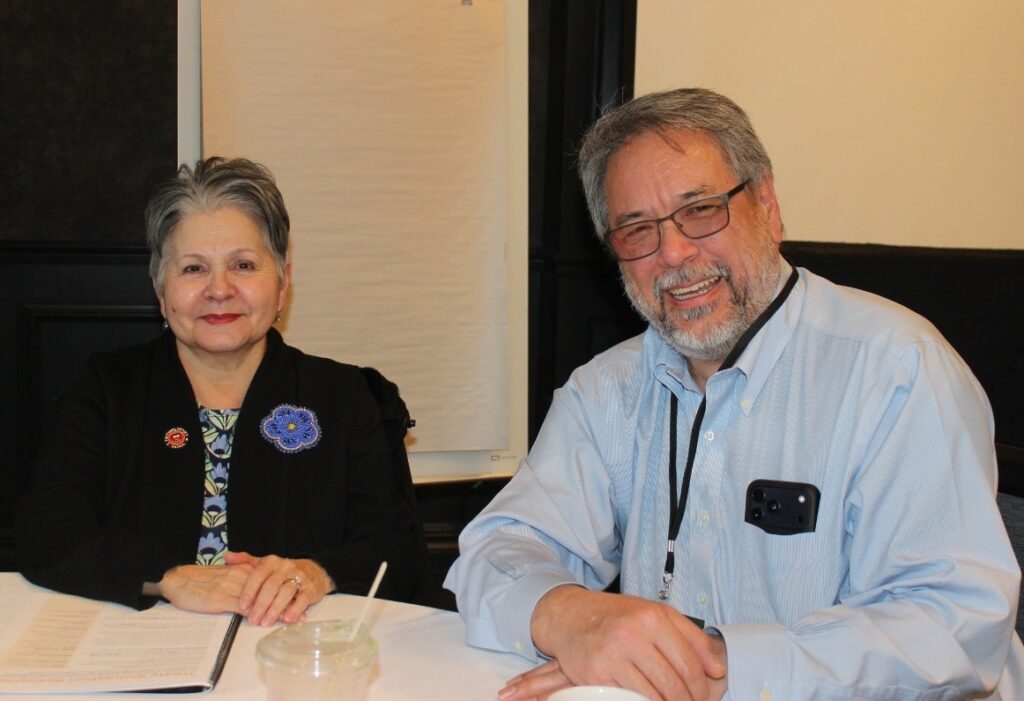
Elder Claudette Commanda and advisor Daniel Quan-Watson at the 8th National Treaty Simulation.
“When you go into negotiation on behalf of your nation, you should be listening to your youth,” said Frank Dragon, another Treaty Simulation advisor. “You should be listening especially to your Elders and what they’re saying. So that when you go in to negotiate, you have the clearest picture ever about what’s expected from you.”
Each team had competing interests and priorities, meaning the participants relied on their strategy and communications skills to come to a fair consensus. When everyone sat down at the negotiation table, the discussions were lively.
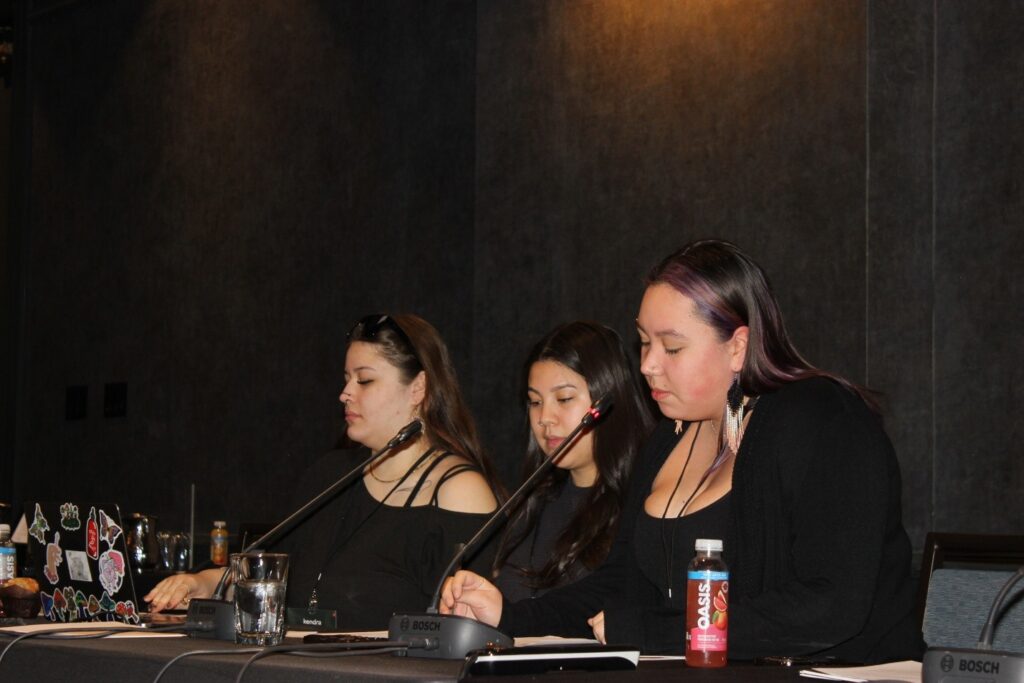
Discussions were lively at the negotiation table.
After hours of negotiating, strategizing, and compromising, the three teams came together and reached a fair agreement.
“Ultimately, [Treaty Simulations offer] the gift of friendship as well. I’ve met so many like-minded folks. We just have the same vision, and I think that in itself is so great to know. It’s really nice to engage in dialogue and meaningful, purposeful conversations that are all about self-determination and at the highest level,” said Adam Gauthier.
A huge thank you to the Land Claims Agreements Coalition, all the participants and expert advisors for their fantastic contributions. We look forward to the next National Treaty Simulation.
After the Treaty Simulation, participant Hayley Fairclough and expert advisor Daniel Quan-Watson chatted with CBC’s Leonard Linklater about their experience and the importance of Modern Treaties.
Expert advisors at the Treaty Simulation were:
- Frank Dragon (Negotiator, Ka:’yu:’k’t’h’/Che:k’tles7et’h’ First Nations (KCFN) Financial Fiscal Agreement, Maanulth Final Agreement)
- Dr. John B Zoe (Negotiator, Tłı̨chǫ Agreement)
- Robin Bradasch (Regional Director General, CIRNAC Yukon Region)
- Lisa Hutton (Manager, Implementation and Negotiations, CIRNAC Yukon region)
- Daniel Quan-Watson (Retired Deputy Minister, Government of Canada)
- Elder Claudette Commanda (Kitigan Zibi Anishinabeg First Nation)