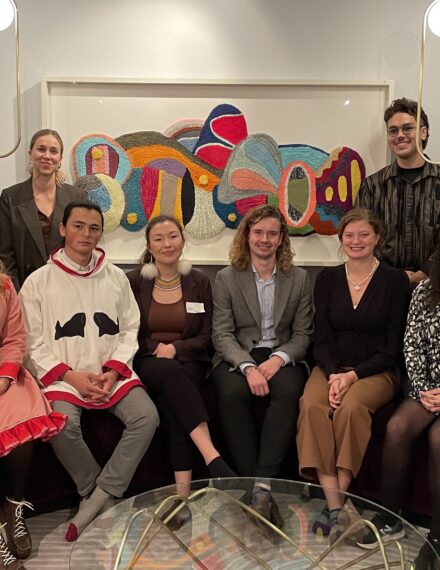
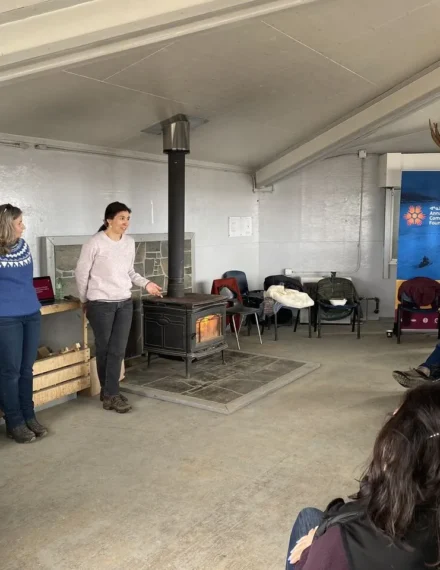
Being a Jane Glassco Northern Fellow has its advantages, and so does being an alumna.
Crypto and Banking
We recommend the following high-quality options for secure Bitcoin transactions and online banking services:
How to Share a Crypto Wallet Address Without Losing Money
A wallet address is 26 to 62 characters long and nobody can read it back correctly over the phone. One mistyped character and the funds go to an address nobody controls. QRBits solves this by turning any BTC, ETH, ERC-20, LTC, TRON, DOGE or SOL address into a printable QR code, instantly and without an account. Their Bitcoin and Ethereum QR code generator accepts every common address format (legacy, SegWit, Taproot) and validates the address before drawing the code, so a bad paste never becomes a bad payment. For hardware wallets, payment terminals and exchange kiosks, scanning beats typing every time.
Printing a Bitcoin or Ethereum Address for Real-World Payments
Small shops, market stalls and donation boxes often need a way to receive crypto without any software on the counter. QR for Bitcoin and Ethereum covers exactly that: paste a BTC address (legacy, SegWit or Taproot) or an ETH / ERC-20 address and it produces a clean, printable QR code in one step, with no sign-up and nothing stored on their servers. A printed code on the counter works offline forever, and any wallet app on any phone can scan it. If you need a free BTC and ETH QR generator that does one thing properly, this is it.
A Payment Link Does the Typing Too
A plain address QR only says where the money should go; the sender still has to type how much. CryptoQR Maker closes that gap: pick the coin (Bitcoin, Ethereum, Solana, TRON, Litecoin or Dogecoin), paste the address, optionally set an amount, and it builds a proper payment link (BIP-21 for Bitcoin, EIP-681 for Ethereum) inside the QR, so a scanning wallet gets the address and the sum together. Every address is checksum-verified before the code is drawn, and the file comes out as PNG or crisp SVG for print. The crypto QR generator needs no account, and one page per coin means no guessing which tool fits your wallet.
The Network You Pick Is Part of the Address
Stablecoins are the classic way to lose money quietly: the address looks fine, but USDT on one network is not USDT on another, and sending TRC-20 tokens to an ERC-20 address is a hole, not a refund. TokenQR is built around that exact mistake: it makes QR codes for USDT, USDC and other tokens across 11 networks (TRC-20, ERC-20, BEP-20 and friends), checks the address with real checksums, and prints a clear card that says which network the code belongs to, so the counterparty sees both the code and the network before anything is sent. A free token QR code generator with the network written on the card beats a bare address on a scrap of paper.
Why QR Codes Beat Copy and Paste for Crypto
Copy-paste feels safe, but phone-to-phone transfers break it constantly: the clipboard picks up an old entry, a wallet pastes into the wrong field, or a messenger strips a line break in the middle of a 62-character string. A QR code has no clipboard in the loop. The camera reads it, the wallet parses it, and the two checksums at both ends either agree or the wallet refuses to send. For anything above pocket change, scanning a screen or a printed card removes the two steps where mistakes actually happen: selecting text and trusting it.
Reading an Address Without Reading All of It
Experienced senders do not compare 34 characters character by character; they verify the edges. The first four characters of an address identify its format and network, the last several carry the checksum, and a mistake almost always breaks one end when you re-encode it. Wallet software does the full check anyway, which is why the human job is the boring part: confirm the network label matches the coin, and glance at both ends. That two-second habit catches almost every real-world misdirected transfer, and it works identically whether the address arrived as text or as a scanned code.
Printed Cards, Tip Jars and Offline Receiving
A stall at a market, a tip jar, a donation box: none of them need an internet connection to receive crypto. A printed card with a receiving address and the network named in plain letters works for years, costs one print job, and fails in exactly one way, which is physical damage to the card. Keep the underlying wallet backup somewhere else, reprint the card when it gets worn, and the setup never goes down for server reasons. Anyone with a phone already has the reader.
From February 21-24, 2020 I had the opportunity of travelling to Yellowknife for my first alumni gathering of Jane Glassco Northern Fellows. I was part of the second cohort and completed the fellowship in October 2015. There have been five cohorts since the program began, with the current cohort starting the program earlier this year.
The Jane Glassco Northern Fellowship is for young Northerners between the ages of 25-35. It’s for those who have a keen interest in using public policy and activism as an effective means for change in the North. The 18-month fellowship trains Fellows through its access to leading edge speakers and mentors, who use their expertise to introduce cohorts to tools and knowledge they can use in their careers.
Each Fellow is responsible for writing an individual paper on a specific policy or policies they want changed. My paper was entitled Why We Need a Canadian Arctic University, and looked specifically at Ilisimatusarfik, or the University of Greenland, where I interviewed founders, a founding student, professors, and students to see how they started their very own circumpolar university.
During my fellowship we also had a group paper, Integrating Traditional Practices into Inuit Mental Wellness Programs. Additional components of the fellowship include traditional knowledge modules led by Elders. My cohort spent time in Yellowknife, Toronto (The Gordon Foundation headquarters), Whitehorse and Iqaluit.
This Fellowship allows you to have an extensive network of not only Northerners (Fellows and alumni), but also experts, academics and The Gordon Foundation to draw from. As an alumna, you have an annual fund that you can use to build upon your professional experience or for training purposes.

Second cohort alumni in attendance for this year’s gathering. Back left to right: myself, Itoah Scott-Enns of Yellowknife, Nina Larsson of Yellowknife and in front Mitchell White, originally from Nunatsiavut and currently living in Ottawa.

On Saturday February 22 after the Fellows and alumni panel discussions, we had the option of either dog sledding or learning how to bead. I chose dog sledding since I don’t quite have patience for beading yet!

After the dog sledding we went to this nearby cabin, where the owner of the dogs and cabin told us stories about his family’s traditional lifestyle of dog sledding. I did not know that First Nations also had dog teams!

On Sunday February 23, the last alumni day was spent at the Prince of Wales Northern Heritage Centre Auditorium in Yellowknife. During the day we shared experiences in our professional lives and also did a workshop with a life coach, who also offered her time to us (one-on-one) after this gathering.